05. May 2012 · · Categories: All, Sunset Boulevard

Work In Progress: Macy Street Bridge, Los Angeles, 4-29-12
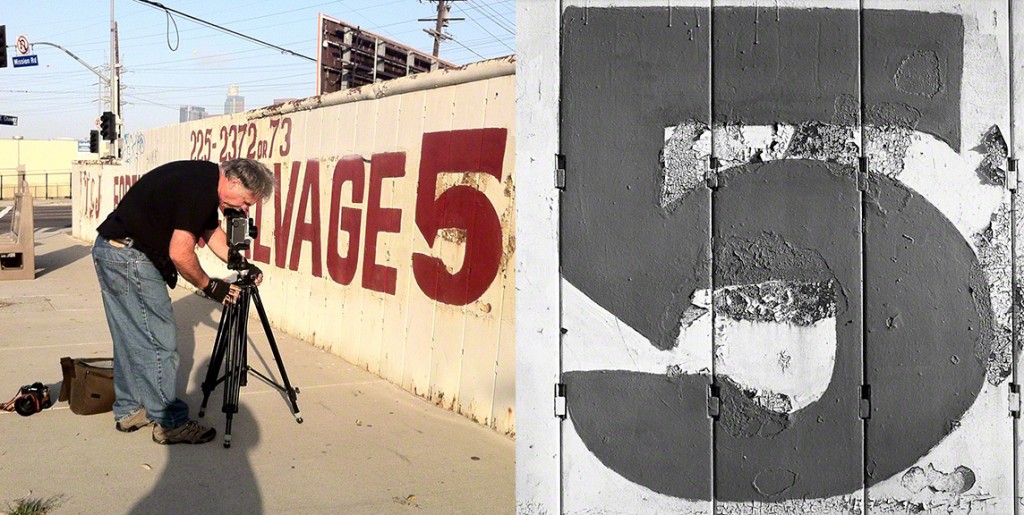
Near Macy Street Bridge

    From interstate 5 North, I took the 101 North and exited onto Cesar Chavez Avenue. Taking the Cesar Chavez exit will deposit you into the Boyle Heights section of Los Angeles. A couple of left turns and the Macy Street Viaduct over the Los Angeles River is all yours. It is a beautifully constructed bridge built in 1926 and some 31,000 cars use it daily to connect to downtown Los Angeles, sending you by Alvarado Street and Old Town, directly into Little Tokyo.

   As always, the chiaroscuro of the day’s first light is my partner in image making. Yet, even with the fact that you share this morning with nearly 4 million Angelenos, there is coolness, clarity, and quiet. As the morning ages the light comes up quickly, and certain subjects start to melt into the mid-day sun. Heading north over the bridge to downtown L.A., Cesar Chavez Avenue turns into its predecessor: Sunset Boulevard, my muse.
                                                          See Sunset Boulevard Gallery

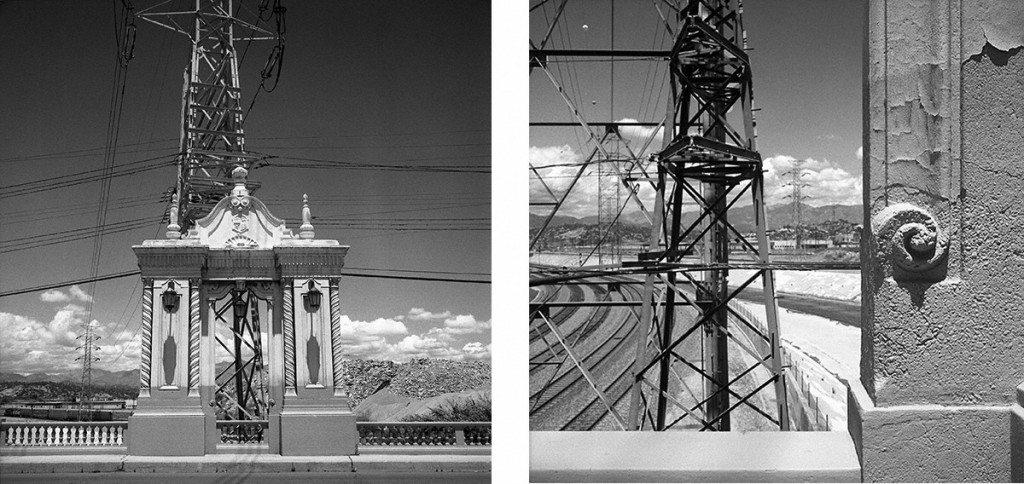
Macy Street Viaduct, Looking East, Craig Carlson
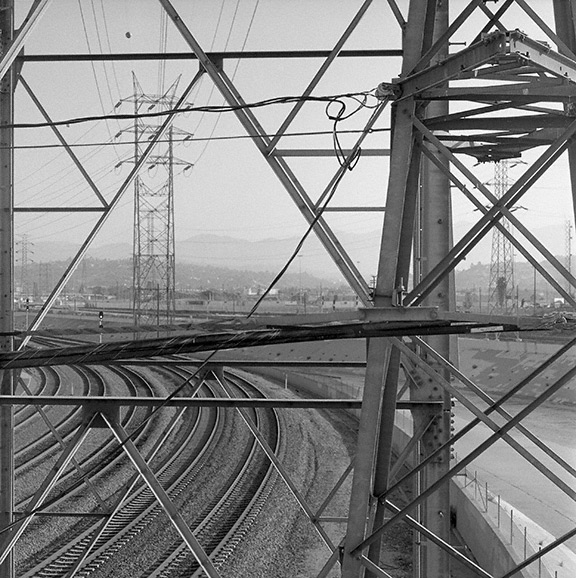
Overlook From Macy Street Viaduct, Looking East, Craig Carlson

                                     All Content ©Copyright Craig Carlson 2012 All Rights Reserved
04. May 2012 · · Categories: All

Depicting Space: Photography’s Final Frontier
  Peter H. Emerson in his book “Naturalistic Photography,” made a valiant attempt to explain that photography was art, and alerting photographers to the main business of photography: depicting space. But, Emerson in 1890 recanted his belief that photography was art, “That photographs were rendered by mechanical methods, not the personal means, essential for artistic creation.”

   Emerson in his book explained that not every square inch of a photograph had to be sharp. That it was possible by selective focus or his term “differential focusing,” to break a photographic canvas into the near, middle and far by using sometimes a “shallow depth of field.” Eugéne Atget who probably had no idea who this English aristocrat was (Emerson’s father made a fortune growing sugar cane in Cuba) took the matter of depicting space into the 20th century while photographing the Paris environs.

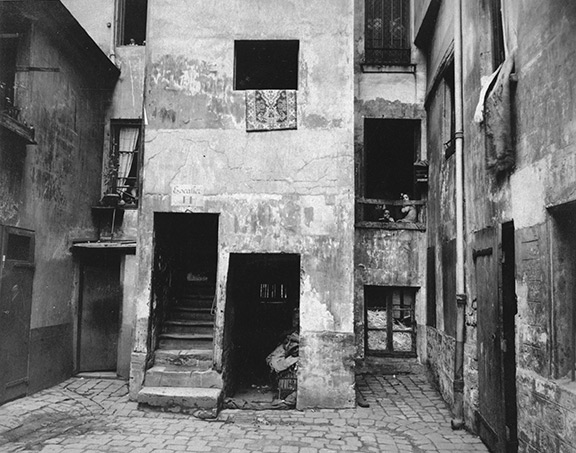
   Atget understood better than Emerson that it wasn’t depth of field or organizing near, middle and far which depict space in a photograph, but what the photographer pointed his camera at. Eugéne Atget’s work is all about how a picture plane should behave when you choose your subject matter wisely.

Eugéne Atget, Cour, 41 rue Broca (1912)

See, “Gathering Water Lilies,” (1886) Page 10, Peterson, Peter Henry Emerson and American Naturalistic Photography, 2008,  ISBN 978-0-91296-498-0.
See, “Cour, 41 rue Broca,” (1912) Page 127, Szarkowski, Atget, ISBN 0-87070-094-4.

                                    All Content ©Copyright Craig Carlson 2012 All Rights Reserved